The winners of this year’s Bloomberg Philanthropies Mayors Challenge created innovative projects to improve their cities’ core services – many using some combination of artificial intelligence and the wisdom of their residents.
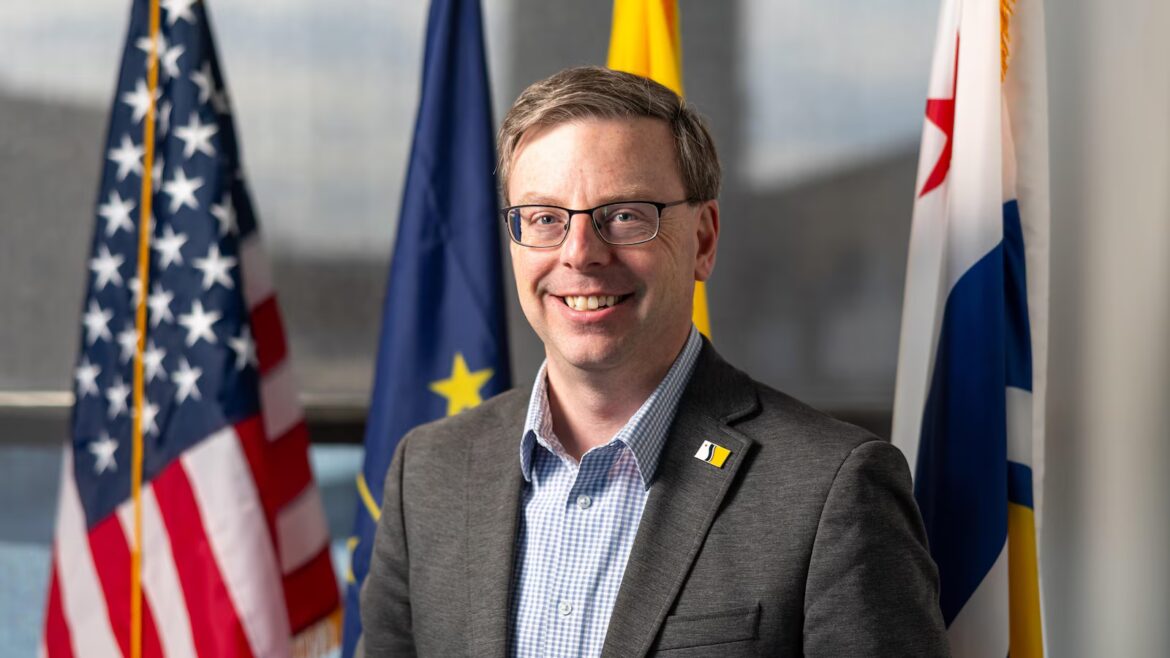
That’s what South Bend, Indiana, Mayor James Mueller did with his initiative that uses AI to interpret data about residents, like a family falling behind on paying its water bill, and to help offer them services and support that could prevent larger issues.
“Technology is not necessarily good or bad – it’s how it’s used and how you protect against abuses,” said Mueller, a Democrat who has been mayor since 2020. “We’re trying to use cutting edge tools to deliver city services in a proactive way that meets our residents’ needs.”
The twenty-four winners announced Tuesday range from Boise, Idaho, where they are using geothermal energy to lower residents’ heating bills, to Beira, Mozambique, where they are relocating fishermen and their families from flood-prone coastal homes to safer inland houses. Each will receive $1 million to implement the program, as well as support from Bloomberg Philanthropies experts to help the new initiative succeed.
The hope, says former New York City Mayor Michael R. Bloomberg, founder of Bloomberg Philanthropies and Bloomberg L.P., is that successful programs from Mayors Challenge winners can be used in other cities.
“The most effective city halls are bold, creative, and proactive in solving problems and meeting residents’ needs – and we launched the Mayors Challenge to help more of them succeed,” Bloomberg said in a statement.
James Anderson, head of government innovation programs at Bloomberg Philanthropies, said many of this year’s winners are integrating AI technology into their work in sophisticated ways, bringing municipal governments closer to the residents they serve.
“Testing and learning and adapting new ideas don’t generally get funded with public dollars,” Anderson said. “It is up to philanthropy to support experimentation.”
Vico Sotto, mayor of Pasig City in the Philippines, said becoming one of this year’s Mayors Challenge winners will speed up his project to build floating parks in the Pasig River that will become new community space and reduce flooding threats in the area. Without the support of Bloomberg Philanthropies, Sotto said the initiative wouldn’t be able to start for another year or two.
“The government doesn’t have a great reputation when it comes to maintaining infrastructure,” Sotto said. “So we will be creating a governance council, including people who live in the area, so definitely they’re not going to abandon these parks. They’re going to take care of them because they’re using them as well.”
In Lafayette, Louisiana, the city-parish had the opposite problem. Lafayette wanted to update parts of its sewer system, but because some parts were on homeowners’ property the city wasn’t allowed to pay for it.
Mayor-President Monique Blanco Boulet said the Mayors Challenge encouraged her administration to figure out a solution that will now allow Lafayette to make the repairs and, as a result, encourage development in the city. The plan was also named a Mayors Challenge winner.
“Bloomberg Philanthropies, the staff, Michael Bloomberg – all of them – have such a global impact in ways that most people will never know,” said Boulet, a Republican elected in 2023. “They bring in a level of capacity and give you the space to really be creative and to come up with solutions that can change lives.”
South Bend’s Mueller said that the Mayors Challenge comes at a time when more and more global problems need to be solved at a local level.
“Trust in government is at an all-time low, but local governments consistently perform better in surveys about trust from their residents,” Mueller said. “It is critical for us to maintain that level of trust with our residents and build it even further. So that’s why we’re always looking at innovative ways of doing things better and making the city a better place to live.”
The winners of the 2026 Bloomberg Philanthropies Mayors Challenge are: As-Salt, Jordan; Barcelona, Spain; Beira, Mozambique; Belfast, Northern Ireland; Benin City, Nigeria; Boise, Idaho, United States; Budapest, Hungary; Cape Town, South Africa; Cartagena, Colombia; Fez, Morocco; Fukuoka, Japan; Ghaziabad, India; Ghent, Belgium; Kanifing, The Gambia; Lafayette, Louisiana, United States; Medellín, Colombia; Netanya, Israel; Pasig, Philippines; Rio de Janeiro, Brazil; South Bend, Indiana, United States; Surabaya, Indonesia; Toronto, Canada; Turku, Finland; Visakhapatnam, India.
_____
Associated Press coverage of philanthropy and nonprofits receives support through the AP’s collaboration with The Conversation US, with funding from Lilly Endowment Inc. The AP is solely responsible for this content. For all of AP’s philanthropy coverage, visit https://apnews.com/hub/philanthropy.